
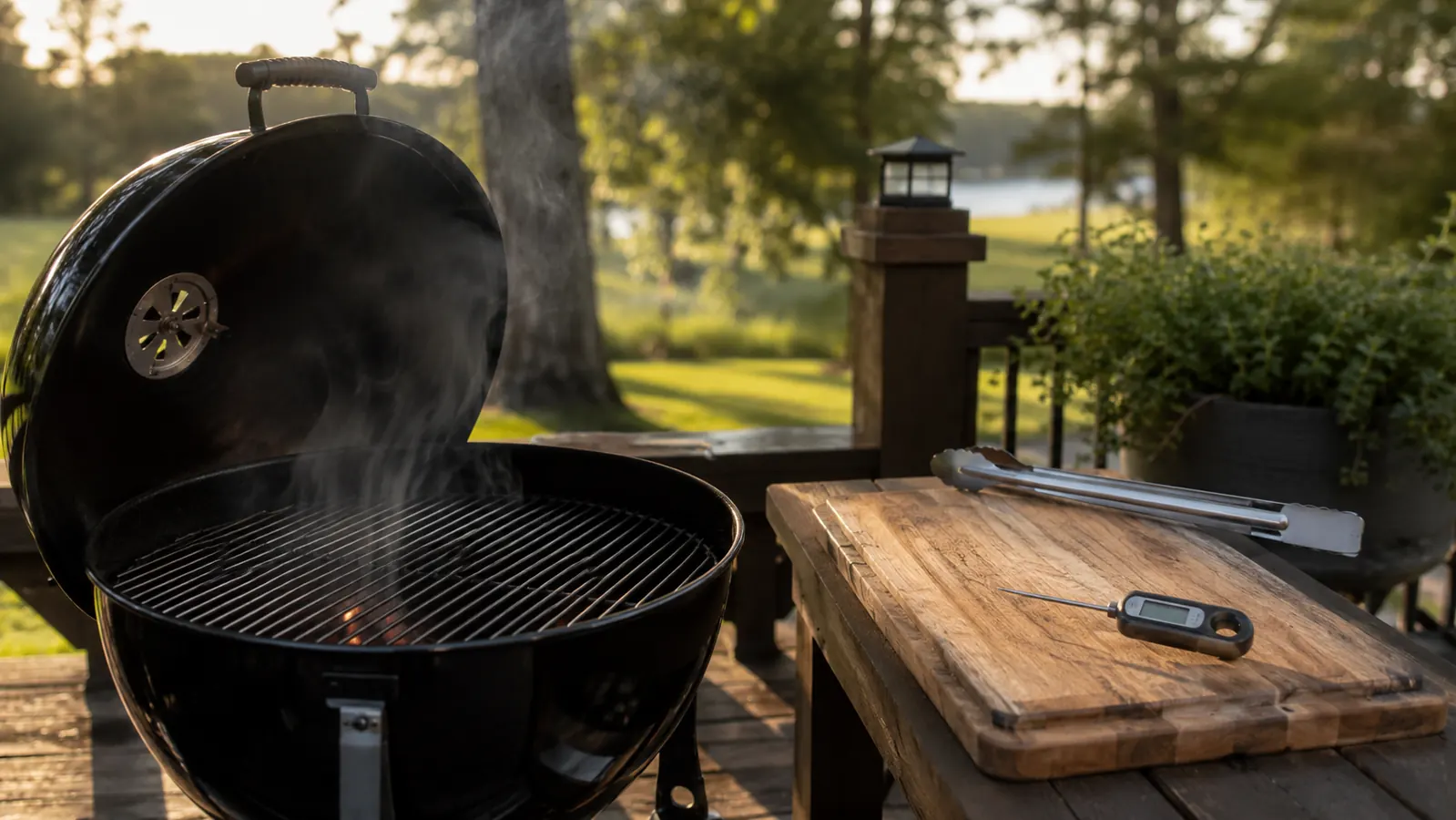
I did not set out to settle a gear argument. I set out to smoke a brisket flat last spring, and by the time that brisket was done I had used two thermometers side by side on the same table. One was an instant-read thermometer, and the other was a wireless probe model. By the end of the summer, after dozens of cooks on my 22-inch charcoal kettle and my offset stick burner, I had a clear answer to the question that kept coming up: which one do you actually need?
Short answer, so you are not left hanging: most home cooks should buy the TempPro TempSwift instant-read thermometer first. The wireless thermometer, and I used a Maverick ET-733 for this comparison, is not a poor purchase or a fancy toy. It is a second tool for a different job. The two are not really competitors. They are more like a measuring tape and a level. You use both on the same project, but in ninety percent of normal cooking, one of them does the heavy lifting.
How I Tested Them on My Own Cookers
I cook outside on the same deck in Dahlonega, Georgia for most of the year. My two cookers are a used 22-inch charcoal kettle and an offset stick burner that I welded a new baffle into. They are not fancy, but they tell you fast when a thermometer is not accurate. Last spring I put the TempPro on the shelf closest to the grill and set the Maverick on the far end of the picnic table. Then I did what I always do on Sundays. I cooked whole chickens, steaks, burgers, pork chops, chicken thighs, two pork shoulders, two racks of ribs, and one whole brisket flat over the season, and I wrote down which thermometer I reached for and why.
That notebook matters more to me than any spec sheet. I was not testing which thermometer had the most features. I was testing which one solved the problem in front of me on a busy evening. On the kettle, the coals are never perfectly even, and on the offset, the fire is always trying to drift. Both cookers demand temperature checks, which meant both thermometers got a fair shot all summer long.
One thing I want to be clear about: I did not try to make them switch jobs. An instant-read is for the spot check, and a wireless thermometer is for the long watch. Forcing the wireless unit to perform one-second reads on a thin pork chop would be just as silly as trying to set an alarm with the instant-read. I tested each one at what it is supposed to do, then asked myself which one I would want if I had to start over.
Another thing I tracked was the stuff most reviews never mention: whether the thermometer was easy to read in the late afternoon sun, whether the button moved when my hands were greasy, and whether the display stayed on long enough to actually use without fiddling. Those small usability details usually decide whether a tool gets used or gets lost in a drawer.
Side by Side: Instant-Read vs. Wireless
| TempPro TempSwift (Instant-Read) | Maverick ET-733 (Wireless) | |
|---|---|---|
| Time to a reading | Reads the center of the meat in about one second | Receiver updates every few seconds once probes are in place |
| Spot-checking thin cuts | Thin probe reaches the center of a chop or burger easily | Probe and cable work better when left in meat through a long cook |
| Unattended long cooks | You need to stay near the cooker and check often | Two probes plus high and low alarms let you walk away |
| Overnight smoker runs | No alarm to wake you if the fire drops | Receiver beeps when pit temp or meat temp goes out of range |
| Storage and care | No cable to fray, probe wipes clean, stays on the shelf by the grill | Transmitter, receiver and cable need a little more care and battery attention |
| First purchase for a weekend griller | Yes, this is the one I recommend for weekly cooking | Wait until long cooks become a regular habit |
Where the TempPro TempSwift Wins
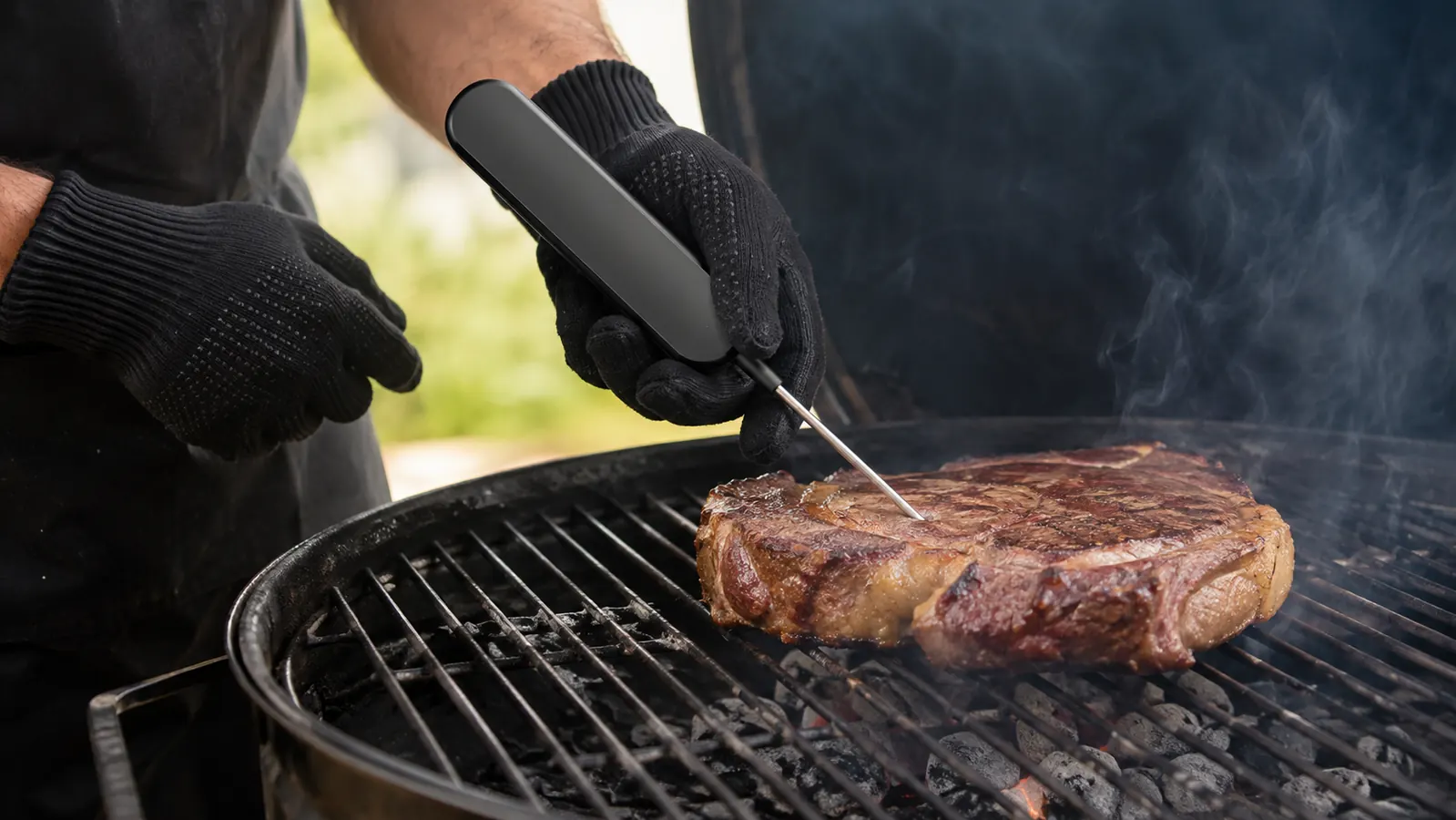
The TempPro wins every time the food is minutes from done. Take a Sunday in late July. I had six chicken thighs over a two-zone fire, and the left side of the coal grate was running hotter because I had dumped the chimney too fast. One thigh looked chestnut brown and another still had pale skin. Instead of moving all six around and guessing, I used the TempPro to check each thigh in about a second. The brown one read 172 and came off. The pale one read 148 and stayed on for another five minutes. Every thigh at the table was cooked through and still juicy. That is exactly the kind of job an instant-read exists for.
The thin probe is the second reason I keep the TempPro in reach. A thick probe will tear a small hole in a pork chop, and when you pull it out, juices follow. A thin, sharp stem slides into the side of a chicken breast or a steak and reads the center without damaging the meat. When I am searing a two-centimeter thick filet for Deb, I want one small entry point, not a stab wound.
Speed and thinness matter on a weekday when the sun is dropping and dinner is overdue. I do not want to guess, and I do not want to wait for a probe to settle for ten seconds. The TempPro settles almost instantly, and the screen is bright enough to read at the edge of the deck when the light is gone. After a summer of use, it still agreed with my boiling water check and my ice water check within one degree. Two earlier cheap instant-reads I owned drifted much sooner than that. A thermometer that lies to you after a season is not a tool, it is a trap.
I am not telling you the TempPro is perfect for every cook. It cannot sit in the meat while the lid is closed and it cannot send an alarm to the house. On a brisket, I still use the Maverick. But when someone asks me what one thing makes the biggest difference in their grilling, I point at the instant-read on the shelf. It makes you pay attention to the meat instead of the clock.
Where the Maverick ET-733 Wins
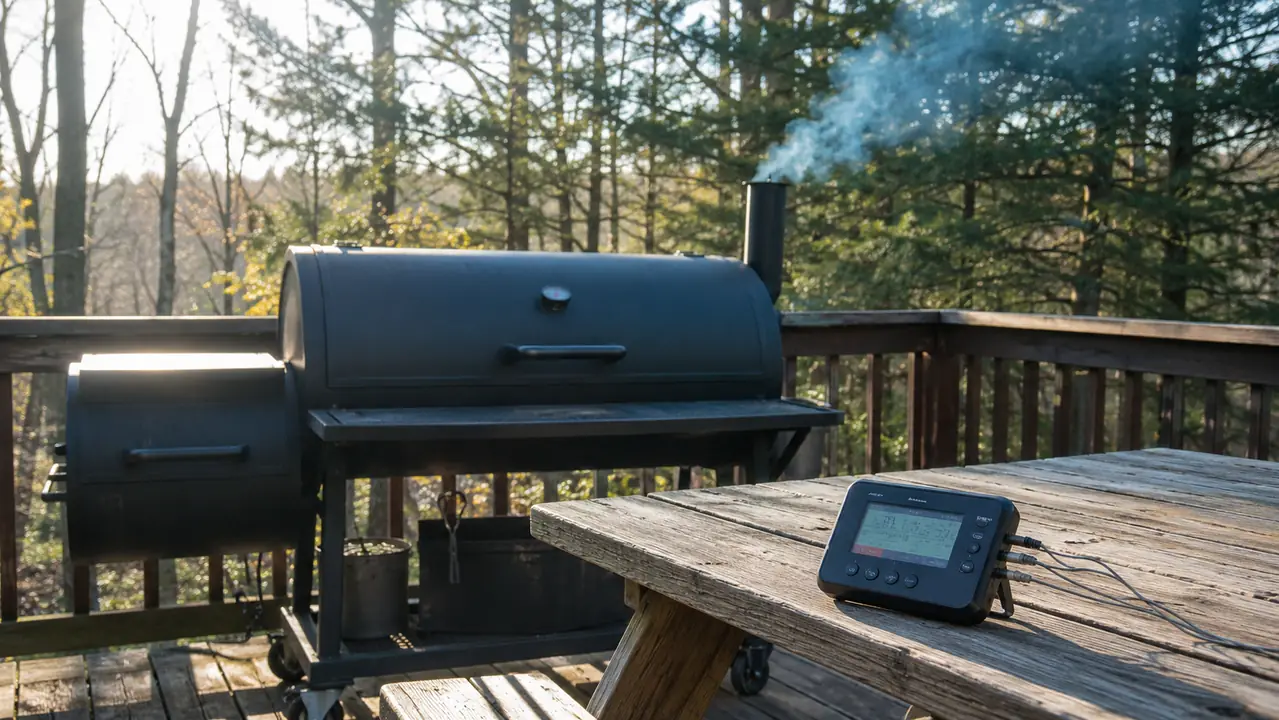
The wireless thermometer earns its keep on cooks that run six or more hours. On the offset smoker, my job is less about the meat and more about the fire. When I load a pork shoulder at ten at night and plan to run it until breakfast, I need to know what is happening without hovering over the firebox. The Maverick has a probe that goes into the meat and another probe that clips to the grate to read the air inside the cooker. The receiver sits on the counter in the kitchen and shows both temperatures, with high and low alarms I can set before I go inside.
One night in late October proved the value of that alarm. I had a brisket flat on the offset, and a cold front moved through after midnight. The wind shifted and started hammering the side of the cooker. The pit temperature dropped from about 250 to the low 180s in what felt like minutes. I was asleep upstairs when the Maverick receiver beeped. I walked out, opened the firebox, added a split of hickory, and closed the damper just a little. The brisket never stalled, and we ate it the next afternoon. That beep is exactly why a wireless unit earns its place in the drawer.
The wireless unit also helps for long cooks where the food is in the kitchen oven instead of the smoker. On Thanksgiving, Deb handles the bird in the house while I keep an eye on the fire. The Maverick food probe goes into the thickest part of the turkey thigh, and the clip probe sits on the oven rack. The receiver tells us when the turkey is close without opening the oven door a dozen times. It is more setup than an instant-read, no question, but for a once-a-year bird, it is the difference between calm cooking and chasing temperature.
To be fair, the wireless unit has a learning curve. Setting the high and low limits takes a minute, the cable needs to be routed under the cooker lid without getting pinched, and the receiver likes fresh batteries. It is not the tool I reach for when I am cooking burgers. But every limitation is worth it on the nights when the alternative is sleeping next to a smoker.
The caveat with the wireless unit is that it demands a little planning. You have to remember to insert the probe before the fire is going, route the cable so it does not touch a hot surface, and set the alarms before you go inside. I have forgotten the alarms more than once. On those nights, I end up watching the receiver like a hawk anyway. It is not a set-it-and-forget-it tool, but nothing that does real work is.
Buy the TempPro TempSwift First
If you grill most weekends, the instant-read thermometer is the upgrade that changes the most about your cooking. You can add a wireless remote later, when the overnight cooks start calling. See the TempPro TempSwift's current price and recent owner reviews on Amazon.
Amazon Check Today's Price on Amazon →Who Should Buy Which
Here is the advice I actually give a friend who is buying their first good thermometer. If you cook chicken, pork, burgers or steak most weekends, buy the TempPro first. It will change your day to day cooking more than any other single tool. The wireless unit can wait until you have tried an overnight cook and decided you want to do more of it.
On the other hand, if a whole brisket or two pork shoulders is already on your calendar, and you want to smoke them without sleeping in a camp chair, then the Maverick style of thermometer should come first. It solves a problem the instant-read cannot solve. You will still want the TempPro for the middle of the cook, to probe multiple spots and check the thin parts, but the wireless alarm is the piece that lets you walk away.
Here is the test I give people when they tell me they cannot decide. Look at the last five cooks you did. How many times did you pull the meat off the fire because the clock said it should be done? How many times did you cut into a piece of meat just to check? If that is most of your cooks, buy the instant-read. If the problem was never a dry chicken breast and was always a stalled brisket at two in the morning, buy the wireless unit.
If you are cooking on a gas grill instead of charcoal, the recommendation does not change. Gas grills have hot spots too, and the instant-read still tells you when a chicken breast is safe before you pull it. The wireless remote is just as useful when you are sitting in the backyard and do not want to keep walking over to the grill. Match the tool to the time you spend away from the cooker.
When you buy both, and I think most dedicated cooks eventually do, buy them in an order that matches your next six months. There is no universal right answer. The only wrong answer is buying a wireless thermometer because it looks impressive in the box, then realizing you still cut into every piece of chicken because you do not have an instant-read handy. My own shelf holds the TempPro next to the tongs and the Maverick in its case until the next long cook. They do not compete. They are both part of the same afternoon of cooking, just at different moments.
Need a Fast Temperature Check Today?
Whether you are smoking a shoulder or pan-searing a chop, a one-second instant-read thermometer gives you a straight answer. Check the TempPro TempSwift on Amazon for today's price and reviews.
Amazon Check Today's Price on Amazon →