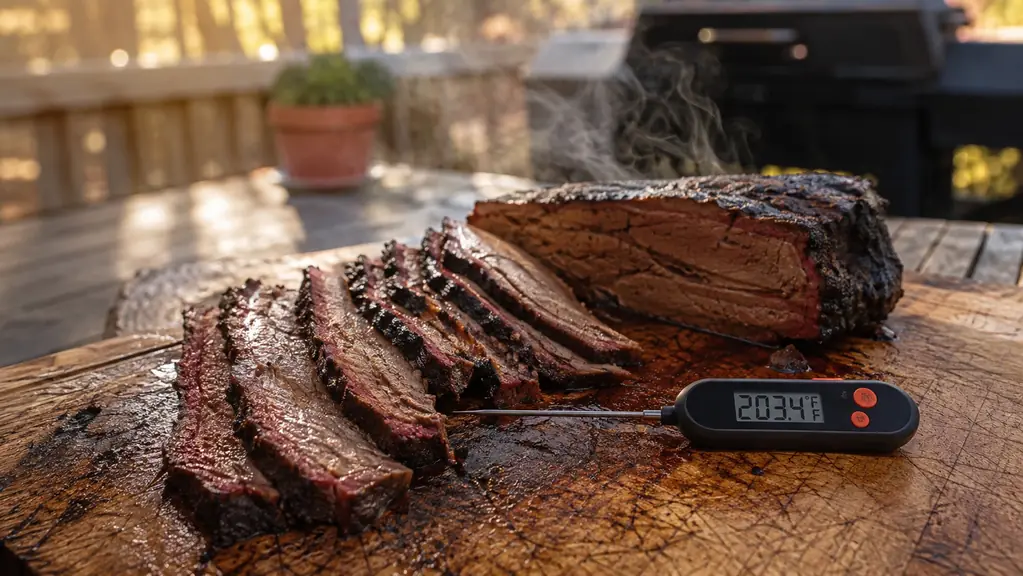
I had been cooking outdoors for well over a decade before I owned an instant read thermometer worth keeping. Until then I checked doneness the old way: poke the meat with a finger, nick it with a knife, and hope. I served more than one expensive brisket that was either tough because I pulled it early or dry because I left it on too long. So when I give you the honest truth about instant read meat thermometers, I am coming at it as somebody who paid for that ignorance in ruined meat. They fix exactly one thing, and it is the one thing most of us get wrong for years: knowing what is actually happening in the middle of the cut. Everything else is convenience.
This review is the plain version of what I learned after running a TempPro TempSwift on my charcoal kettle and my offset smoker through a full season of Sunday cooks. I will also tell you what the package does not. The probe only reads at its tip, the one second claim is a best case and not the usual case, and the habit that saves the most cooks is not the instrument you buy but checking the temperature in more than one spot. If you are shopping for certainty, here is what actually delivers it.
The Quick Verdict
Fast, accurate, and simple enough to stay in the drawer I grab first. The catch is not the tool, it is the technique: the TempPro only reads where you put the tip, and that is a skill, not a spec.
Amazon Check Today's Price →Stop guessing when dinner is actually done.
Before your next brisket or pork shoulder, put a thermometer in your hand that tells you the truth about the middle of the meat. See today's price and more than 55,000 owner reviews on Amazon.
Amazon Check Today's Price on Amazon →How I Tested It
My test setup is simple because my cooking setup is simple. I run one 22 inch charcoal kettle that I bought used and an offset stick burner that I welded a new baffle into myself. I burn lump charcoal and split oak or hickory from my own property. Most Sundays we cook for Deb and whoever turns up, which usually means six to ten people and one large piece of meat. That is the test that matters: real cooks, real fire, and real consequences if I read the temperature wrong.
First I checked the numbers it claims. In a glass of ice water the display settled at about 32 degrees and held there, which told me it was not lying out of the box. Then I used it across a season of real cooks: a full packer brisket on the offset, a bone in pork shoulder on the kettle, a spatchcock chicken, and thick steaks over lump charcoal. On every cook I took readings in at least two spots on purpose. That is where a thermometer earns trust or loses it.
I also tested where these tools lie to you. A shallow poke near the surface reads the hot air around the meat, not the middle. A poke that grates against a bone reads high. A probe left resting on the grate reads the grate. All three are operator error, but nobody explains that when you buy the thing, and all three will make you doubt a good thermometer before you learn the technique.
What Nobody Tells You About That One-Second Read
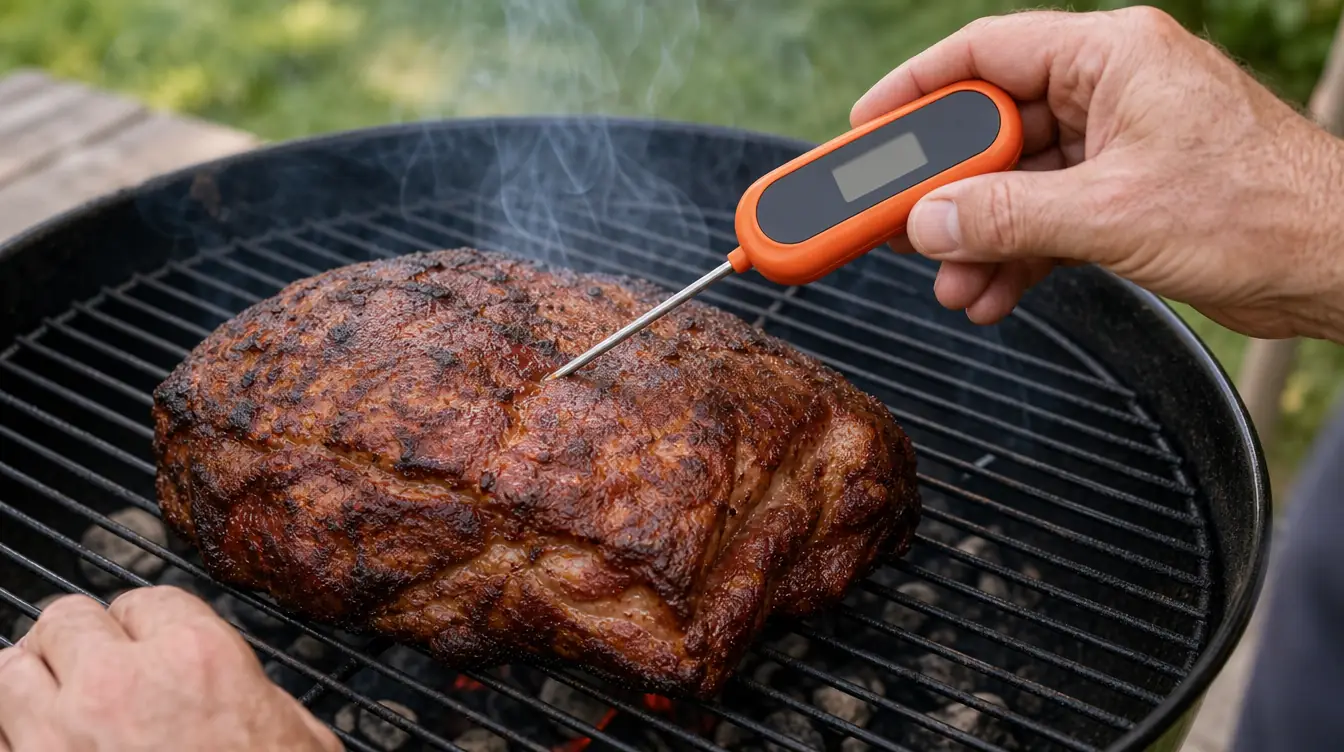
Start with the number on the box. The TempPro TempSwift claims a one second read, and on a thick piece of meat with the probe placed right, that is roughly true. The part that does not make it onto the package is this: the sensing element lives near the end of the probe. The display is only as honest as your aim. Slide the tip into the center of a brisket point and the number settles in about two seconds. That is still fast enough to feel like a cheat, but it is not one second.
Where the one second claim falls apart is thin meat. Jab a probe straight down into a thin pork chop and part of the tip ends up in the hot air instead of the muscle, so the reading runs high. The fix is to go in from the side, level with the cutting board, so the whole tip sits inside the meat. Nobody hands you that trick with the thermometer. I learned it the way most people do, by doubting the reading first and then figuring out who was really wrong.
The same goes for anything near a bone. Push the probe into the gap beside a joint and you are reading the bone, which runs hotter than the meat around it. The habit that fixed all of this for me: take a reading, pull the probe, move it an inch, and take another. Two readings that agree are worth more than one reading from the most expensive thermometer ever made.
Where It Earned Its Keep
The real value shows up in the long Sunday cook, and specifically in the stall, that stubborn stretch where a brisket or shoulder parks in the 150s and 160s for hours. A leave in probe will show you that plateau on a screen you can read from the porch. With an instant read you have to be present to catch the numbers moving, but if you are tending a stick burner you are present anyway. I poke the meat every time I add wood, and watching the reading climb from the 160s tells me the stall is ending before the meat dries out.
The moment that convinced me came about four hours into a brisket cook. The flat looked even from the outside, so I almost left it alone. Then I ran the probe from one end of the flat to the other and found a 15 degree split, with the thin end running well ahead of the thick end. I spun the pan around, the cook evened out, and we ate on time. That one habit, checking more than one spot, is worth more than the brand printed on the thermometer.
The other place it earns its keep is the rest. Pulling a roast off the fire at the right number and letting it rest is the difference between meat that pours juice across the cutting board and meat that keeps it. A quick probe leaves the surface intact, where a slice to peek lets the juices run. Deb used to ask me if dinner was done. Now she asks what the thermometer says, which is a better question.
One pass with the probe showed a 15 degree split from one end of the brisket to the other. The fix took thirty seconds and saved the cook.
What Honest Buyers Should Know About Accuracy
The accuracy question is the one everybody asks, and the package answers it with a spec sheet. Here is the plain version from somebody who checks these things. Any decent digital thermometer made in the last several years is accurate enough for cooking if it checks true in ice water. A degree or two of tolerance does not change dinner. What changes dinner is where you put the probe and how long you let the reading settle, which is why two cooks with the same thermometer can get different results.
So do yourself a favor and test yours the day it arrives and then at the start of each cooking season. Ice and water in a tall glass, wait a minute, and see what it says. If it reads 32, trust it. If it drifts later, do not fight it; these are tools you replace, not heirlooms you repair. The ten seconds that check costs is what keeps every Sunday honest.
The Annoyances That Show Up After the Honeymoon
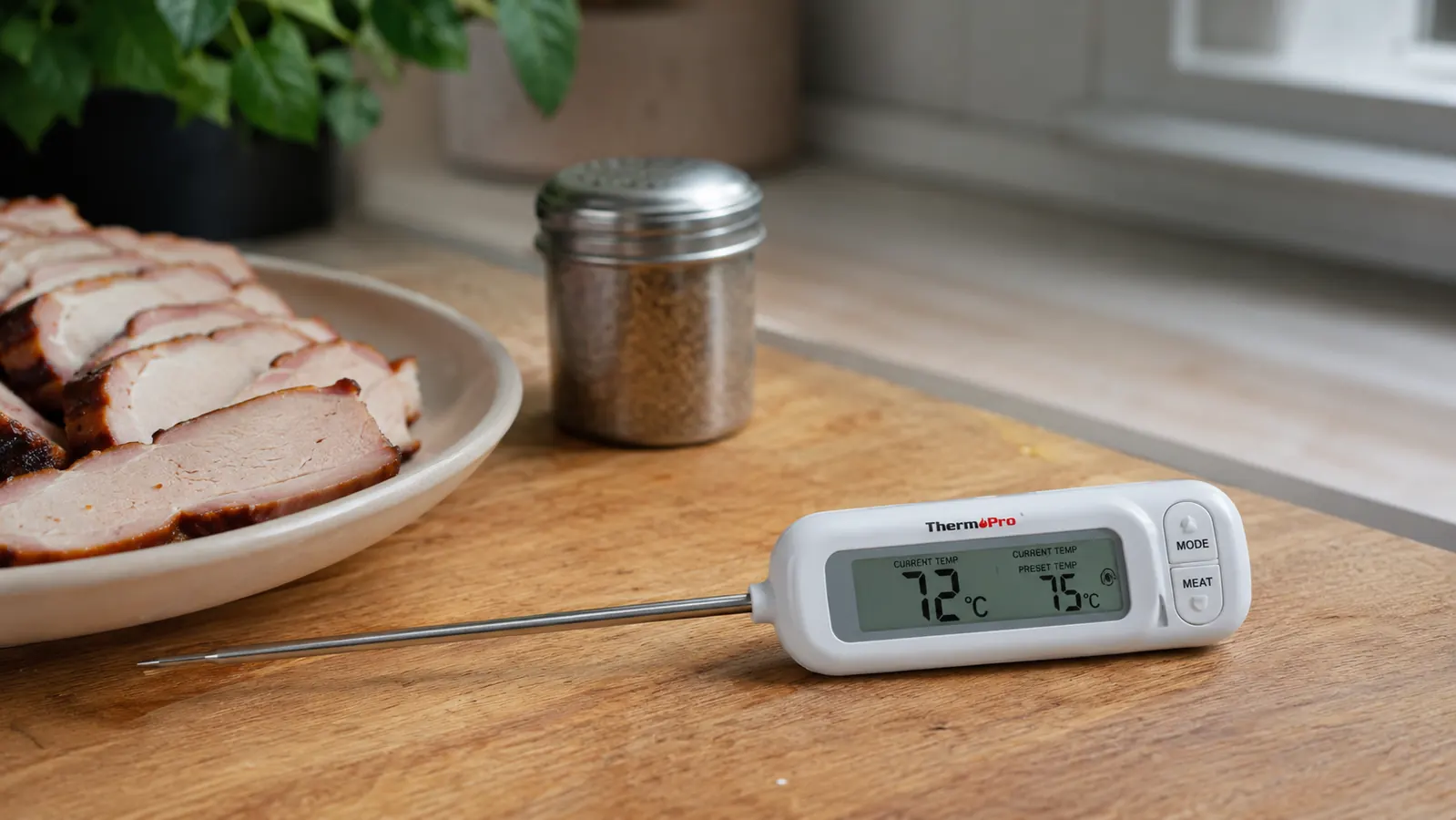
Now the honest part, which is also the part most reviews skip. This is not a leave-in thermometer. You stick it in, read the number, and pull it out. It will not sit in a brisket for twelve hours and beep at you overnight. If you cook low and slow while you sleep, you are shopping for a different tool entirely, a probe that stays in the meat and talks to a base unit. Most of us end up owning one of each because they do different jobs, and knowing which one you need before you buy will save you the disappointment.
Battery life is fine, but the category has one weakness that catches everybody eventually. The thermometer sits in a drawer for months, and the weekend you finally smoke a shoulder, the display is dead. That is not a defect, it is the nature of a tool you grab rather than leave on. I keep mine in the same drawer as my chimney starter, and I check it the night before a long cook instead of the morning of.
The last honest limitation is the one people do not like hearing. The tool is only as good as the hand holding it. Shallow pokes, bone contact, thin cuts, and impatient reads: all of them produce numbers you cannot trust, and all of them are on me, not the thermometer. Once you accept that, you stop blaming the tool and start fixing the technique, which is the moment these things become useful.
The Mistakes It Cannot Fix for You
Here is the blunt version. A thermometer tells you the temperature of the meat. It does not tell you what to do about it. If you do not know that brisket is ready around 195 to 203 degrees, or that chicken thighs need about 175, no probe in the world will rescue dinner. The tool removes the guesswork from measuring, not from planning.
It also cannot fix a fire. If your cooker swings between 225 and 325 all afternoon, the best thermometer ever made will just document the problem. It will not steady the temperature for you. What fixed my wild swings was a baffle I welded into the firebox, not a gadget. Buy a thermometer for the information it gives you, and fix your cooker with something that actually controls the heat.
In other words: know your target, run a stable fire, and use the thermometer for the one question only it can answer, which is whether the middle of the meat is where you want it.
The third thing it cannot fix is distraction. An instant read rewards the cook who stays close to the fire. On a long cook, the last stretch of a brisket can climb quickly once the stall breaks, so a reading taken and then ignored for twenty minutes is a reading wasted. If you want to wander away and trust a number to call you, that is a leave-in probe with an alarm, and that is a different tool entirely. The TempPro is the right tool for the cook who is already standing there, which is the only honest way to use one.
What I Liked
- Settles on a trustworthy reading in about two seconds on thick meat
- Checked true in ice water, which is more than I can say for every dial thermometer I have owned
- Simple enough that I grab it without thinking, and Deb uses it without asking how
- Reads fast enough that you can check several spots before the heat escapes
- No pairing, no app, and no charging cable to lose
Where It Falls Short
- The one second claim is the best case, not the everyday case
- No good for thin cuts unless you insert the probe from the side
- It only reads where you put it, so bad technique produces bad numbers
- Not a leave-in thermometer, so an overnight cook needs a second tool
- Batteries die in the drawer if you forget it for months
Who This Is For
This thermometer is for the cook who already has a grill, cooks for family on the weekend, and has been burned before by overcooked meat or a thermometer that lied. It is for you if you have ever stood over a brisket wondering whether to trust the clock or your gut, when a two-second check would have settled it. If you cook thick cuts more than a few times a year, this is the tool I reach for when the fire is right and the only unknown left is the middle of the meat.
It is also for the cook who wants to learn, not just finish. Checking the stall, watching carryover heat climb after the rest, comparing one end of a flat to the other: that is how you get better at fire and meat, because the thermometer gives you feedback instead of luck.
Consistency is the quiet benefit I did not expect. When the same cut comes off the fire at the same number every time, Sunday dinner starts to look easy, and that ease is what makes a backyard cook look like he knows exactly what he is doing.
Who Should Skip It
Skip it if cooking is an occasional weeknight chore and most of what you grill is thin. A thin chop or a burger cooks too fast to need a probe, and a tool that sits in a drawer for months will be dead the weekend you finally want it.
Skip it too if what you are really shopping for is overnight convenience. If you want to load the smoker, go to bed, and wake up to a brisket that is exactly where it should be, you need a probe that stays in the meat and talks to an alarm, not a stick that reads when you happen to be standing there. Buying an instant read for that job is how good tools end up in the back of a cupboard.
One more honest note. If you are the kind of cook who refuses to follow a recipe or a number and goes by feel alone, this thermometer will only annoy you. That is a fine way to cook. It just is not the way this tool works.
Buy the thermometer, learn the technique, and stop carving early.
The TempPro TempSwift has earned its spot on my deck for every Sunday cook. Get today's price, read the current owner reviews on Amazon, and look for the ones that mention thin cuts before you decide.
Amazon Check Today's Price on Amazon →