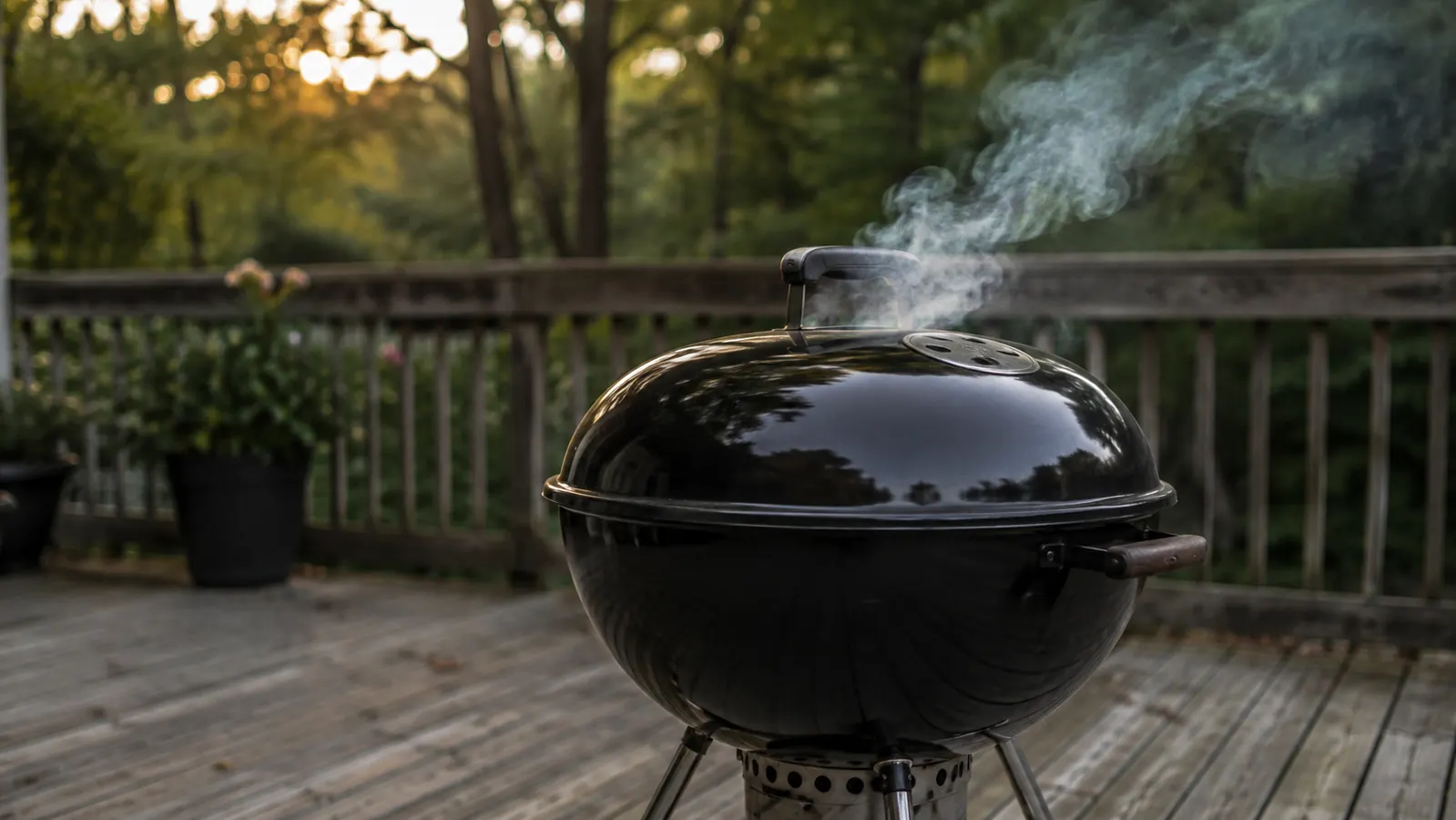
If your grill gets plenty of use but the food still doesn't have that wood smoke personality you grew up eating, the fix might be smaller than you think. I have cooked outside for more than twenty years on a 22 inch charcoal kettle, and for most of that time I made the same mistake. I would set chicken or pork on the grate, close the lid, and hope smoke flavor would show up on its own. It does not. Without a source of smoldering wood inside the cooker, you are just grilling over hot coals. A smoker box gives the smoke a place to come from, and how you place and time it makes the difference between food that tastes charred and food that finishes with a layer of real smoke.
The box I keep next to the grill is a Skyflame Wood Chip Smoker Box. It holds a modest pile of dry chips, sits on the grate, and turns a normal cook into something closer to a backyard smoke session. I reach for it on weeknights when firing up my offset stick burner is more cooker than dinner needs, and on Sundays it works alongside the big smoker for the first blast of hickory. The same method works on a gas grill, with one placement tweak I will come back to in step three.
Put real wood smoke on tonight's cook
The Skyflame Wood Chip Smoker Box is the easiest way I have found to add smoke without pulling out a separate smoker. See today's price on Amazon to decide if it fits your setup.
Amazon See Today's Price on Amazon →Step 1: Pick dry chips that fit the box
The wood you choose matters more than the box, and the size of the chips matters more than the species. A basket this size does not have the volume to ignite a full wood chunk. I use chips about the size of a thumbnail or slightly smaller. They catch quickly, smolder long enough for a typical chicken or pork loin cook, and leave ash that falls out easily. Dust, on the other hand, just turns to ash before it can smoke.
Hickory and oak are my baseline. Apple and cherry go on poultry, and a little pecan gives pork a milder finish than hickory. If you have a local source of mesquite, start with a small handful mixed into the base wood rather than a full load, because mesquite can get sharp. Whatever you choose, keep the chips dry. Store them in a sealed can or a locking plastic tub, not in the bag with the grill cover where they will pick up humidity over the winter.
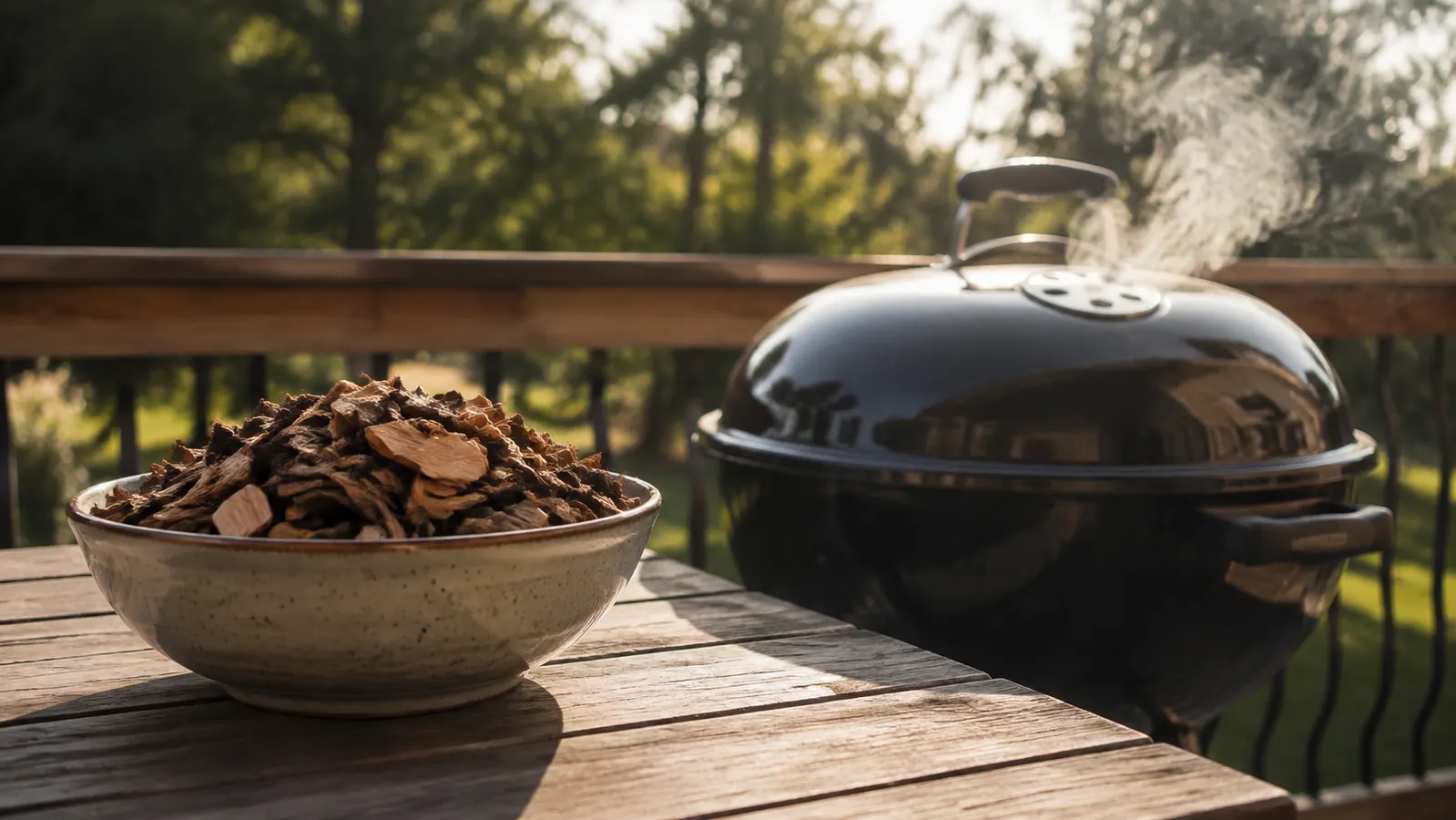
You will read conflicting advice about soaking chips. I stopped soaking years ago. Dry chips start smoking within a minute or two of hitting the grate, and they produce a cleaner smoke. The old soak them in water trick was a way to keep chips from burning up before the cook ended, but a smoker box with a lid and small holes already slows that down. On a gas grill, dry chips matter even more, since you are trying to get flavor into the food before the cook is over, not boil chips on a side burner.
Step 2: Fill the box loosely, leaving room for airflow
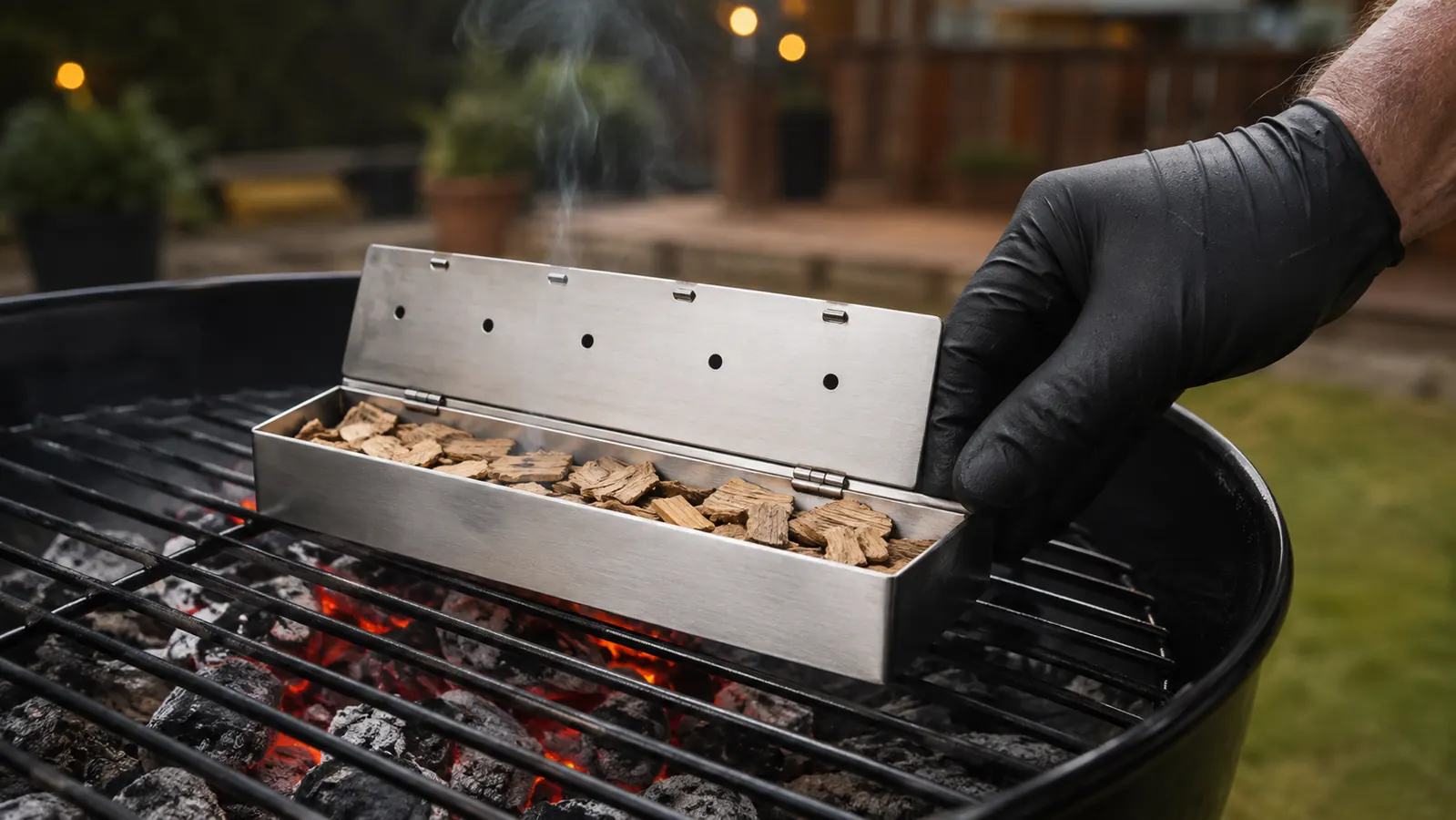
Fill the box about three quarters full and do not pack it down. Chips need air between them to smolder instead of snuff out. Pressing them into a solid block is the fastest way to end up with a box of warm wood that never really smokes. Give the chips a gentle shake after you fill it so they settle naturally, then add a few more to bring the level back up.
Most smoker boxes come with a lid that slides or lifts. Keep it on. The lid is what turns a pile of burning chips into a controlled smoke source instead of a small campfire. If your box does not have holes in the lid, it still works; the gap under the lid provides enough air. With the Skyflame box I find two tablespoons of chips is enough for a forty minute chicken breast cook, while a pork shoulder or a rack of ribs gets a full box at the start and a refill later.
Light the box with the grill's heat, not a flame. The biggest beginner mistake is holding a lighter to the chips until they catch fire. Flaming chips throw soot and bitter smoke. What you want is smolder. Set the filled box on the grate over the heat source and let the grill do the work. The chips should begin to put out thin, bluish smoke within about five minutes. If you see flames licking out of the box, the chips are too hot or the box is too full; remove the box, let it sit on the side table for a minute, and put it back with fewer chips.
Step 3: Put it over the heat, or right beside it, depending on your grill
My kettle is a 22 inch charcoal grill, so the rules are simple. I set up a two zone fire, with lit coals on one side and the meat on the other. Then I set the smoker box directly over the coals on the hot side, lid vent open about half a turn. That position keeps the chips hot enough to smoke while the meat sits on the cooler side and cooks slowly. With the lid down, the smoke travels across the food and out through the top vent. If you are using a gas grill, the same idea works: put the box directly over one of the burner tubes, turn that burner to medium, and leave the rest on the settings your recipe calls for.
Where people go wrong is putting the box in the middle of the grill, far from any heat, and then wondering why the chips never smoke. A smoker box is not a passive fragrance sachet. It needs contact with heat. On my charcoal grill, if I set the box on the cooler side, the chips just sit there. Move it onto the hot grate and the smoke starts within minutes. On a gas grill, that means the box has to be over the flame zone. On a three burner gas grill, set it over the left burner and cook the food over the right two. The heat side gives the smoke, the cooler side gives you control.
Adjust the intensity with the grill's air flow, not by opening the lid. On the kettle I close the bottom vent about a quarter when I want lighter smoke for fish, and open it a little wider for pork or beef. A steady, thin stream of smoke is what you are after. When thick white smoke is pouring out, the box is running too hot and that smoke can taste bitter. Give it a minute to settle, or shift the box toward the edge of the coals. When smoke has almost died out, that is the time to add more chips.
Step 4: Time the smoke, then refill if the cook is long
Here is the part no one tells you: most of the smoke flavor lands in the first hour. After that, the bark has already formed and extra smoke does little more than darken the surface. So I use the box early in the cook. For chicken leg quarters or pork loin, I load it at the start and leave it alone for the whole forty five minutes. For a pork shoulder or a brisket that will run six or more hours, I run a full box for the first hour, refill once at hour two, and quit adding wood after the internal temperature passes about 150 degrees.
Refilling is simple. Wear a thick glove, slide the box to the cool side of the grate or to the side table, let it cool enough to touch the rim, then lift the lid and pour in more chips. Resist the urge to open the whole grill lid every time you check it. Each time you lift the lid you lose heat and add ten minutes to the cook. I set a timer on my phone for forty minutes and only check the smoke through the top vent.
Cook to temperature, not to time or color. The smoke is the dressing, the internal temperature is the doneness. I pull chicken when it hits 165 in the breast, pork when it clears 145 and rests, and ribs when the meat pulls away from the bone. That habit has saved more cooks than any gadget I own.
Step 5: Let the food rest, then clean the box while it's warm
When food comes off the grill, let it rest. Tent it loosely with foil for at least five minutes for small pieces and ten to fifteen for larger cuts. Resting lets the juices redistribute. The smoke flavor does not disappear during a rest; it actually evens out, so skip this step and you do the cook no favors. A quick rest is also the easiest way to tell whether your smoke level was right. If it tastes like a campfire, back off the amount of chips next time. If you can barely taste it, move the box closer to the heat or add a little more wood.
The Skyflame box does not need a deep cleaning after every cook, but it does need a few minutes of attention. When I am done, I let the box cool on the side table, dump the spent ash into the metal ash bucket, and rinse the box under hot water in the sink. Stubborn spots come off with a plastic scrub brush. I do not use soap, because the box will smoke again and I do not want the flavor of dish soap in the next meal. Once or twice a summer, I let the box soak in hot water and vinegar to cut the grease. Dry it fully before it goes back in the cabinet.
If chips have fused to the inside, that is a sign the box runs too hot. Scrape the worst of it off and, next cook, use a smaller pile of lit coals or set the box over a corner of the grate instead of the center of the coals. This happens more often on gas grills because the flame zone is concentrated, so running the box over one burner set to low keeps it from turning into a tar pit.
What Else Helps
Three small tools make the box easier to use. A chimney starter gets the coals ready without lighter fluid, which always leaves a taste that fights the smoke. A wireless thermometer means I can watch the food temperature from the kitchen instead of lifting the lid every few minutes. And a pair of heat resistant gloves lets me move the hot box around without burning my forearms. None of these are expensive, and all three keep the focus on the food rather than on coaxing the fire.
Wood chip choice comes down to what you are cooking. For chicken and turkey, apple or cherry. For steak and burgers, oak or a light hickory. For pork, hickory, maple, or pecan. Keep a few small bags of different chips and mix them rather than loading a whole box of the same thing. You can be generous with wood early, but cut back once the outside of the meat has color, because more smoke after that point just darkens the surface.
Do not trust your nose for how much smoke flavor you are getting. Many cooks stand over the grill and think no smoke is reaching the food, only to bite into chicken that tastes like an ashtray. What you are smelling while the lid is up is the smoke escaping; what matters is what happens inside with the lid on. If the meat smells like smoke when you take it off and tastes like smoke once it rests, the box was doing its job. Adjust the amount of wood by one variable at a time so you know what made the difference.
One question I get most is whether to use the smoker box on a gas grill and still get a decent result. You can, as long as you understand the limit. A gas flame is clean and convenient, but it cannot compete with dirty charcoal flavor or the long slow smolder of an offset stick burner. What the box adds is a definite wood tone. If your gas grill has a dedicated smoking tray or a metal smoker box slot, concentrate the wood there. If you have to sit the box over a burner, use heat shields or a piece of heavy foil under it to keep the chips from scorching.
There is a temptation to reach for the box every time you grill. Do not. Keep it for cooks longer than thirty minutes. A quick flank steak over high heat will not gain much from smoke, and a too hot box can turn a good steak bitter. I keep a small tin of chips next to the chimney starter so I remember to use smoke only when the cook can use it. That restraint is part of good barbecue.
Thirty minutes of good smoke in that first hour does more for a pork shoulder than an entire afternoon of faint smoke after the bark sets.
The first time you use a smoker box, keep it simple. Dry chips, loose fill, box over the heat, meat on the other side, and a lid that stays shut for the first half hour. Within one cook you will see the difference. The smoke ring might be subtle, but the flavor will not be. That is the whole point of the box: it takes a grill you already own and turns it into something that can hold its own at a family Sunday dinner.
Ready to taste what a little wood smoke can do?
The Skyflame Wood Chip Smoker Box is a low cost way to test all of this on your current grill. Look at today's price on Amazon and see if it belongs on your shopping list before the weekend cook.
Amazon See Today's Price on Amazon →