I have thrown away three grill covers in the last ten years. The first one went from looking fine in September to flapping in ribbons by the next July. The second one lasted longer, but it turned chalky, split along the fold lines, and finally tore when I went to put it on for the fall. The third one still sits in the garage, and it is the reason I finally stopped guessing and spent six months comparing a heavy-duty cover against a basic cover side by side.
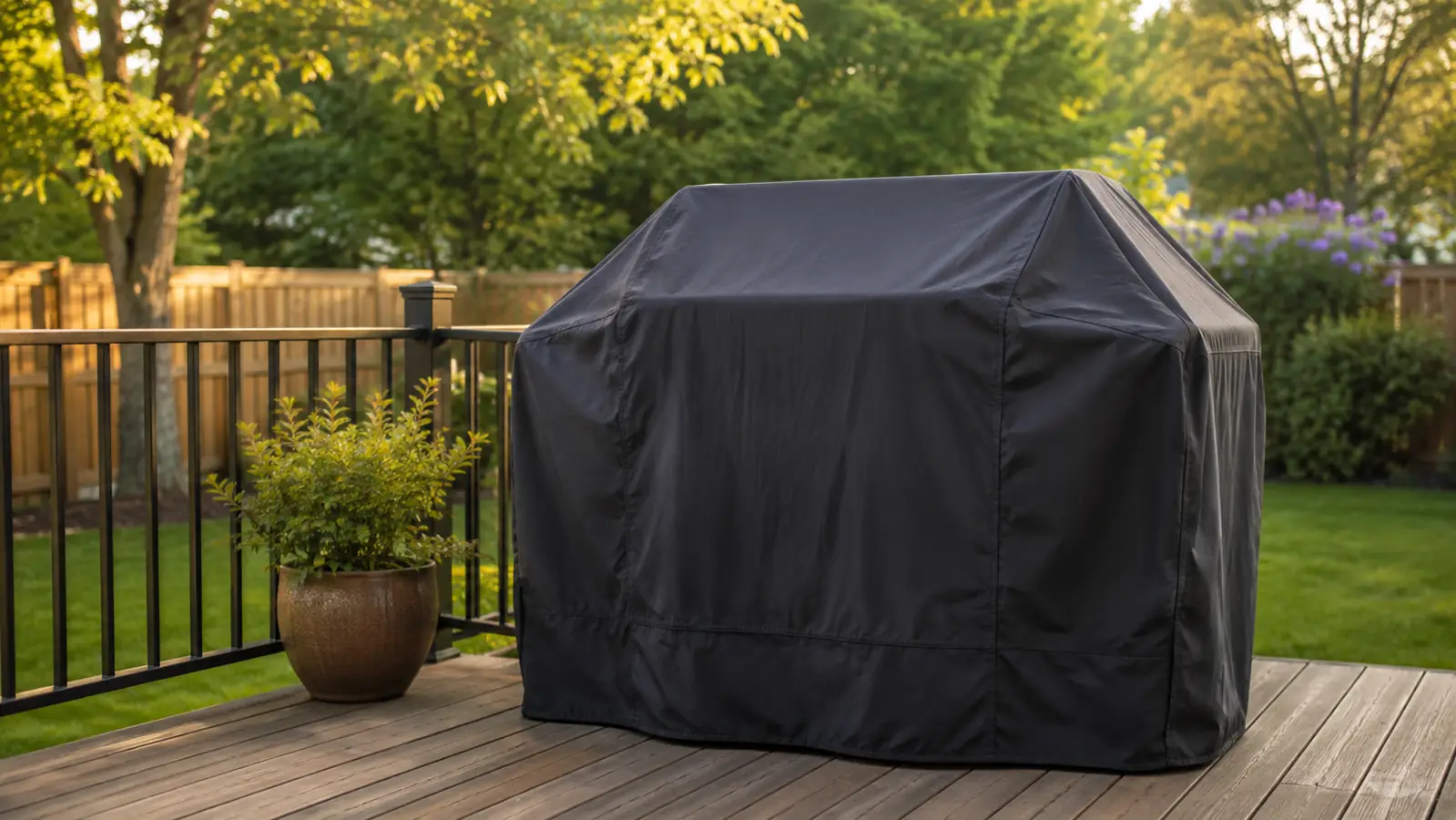
The heavy-duty side of that comparison is the Simple Houseware 55-inch heavy-duty BBQ gas grill cover. I did not test it from an armchair. For six months I kept it on a buddy's five-burner gas grill, which sits out in the open on his deck fully exposed to north Georgia weather. In the carport next to his house, a basic cover stayed on his older grill. Same town, same rain, same sun, same frost. That setup made the differences easy to see.
Let me be clear about my own setup before we go further. I cook on a 22-inch charcoal kettle and an offset stick burner, so I am not the man to ask about propane burners. What I can speak to is fabric, because I spent thirty years as an HVAC contractor working with materials that have to take weather, sun, and temperature swings without falling apart. A grill cover is a smaller job than a roof, but the same rule applies. Cheap material fails first, and it never fails in the middle of a panel. It fails at a seam, a fold, or a strap.
Here is my short answer after all of that. If your grill lives outside in every season, the heavy-duty cover is worth the extra money, and this Simple Houseware version belongs next to covers that cost more. If your grill sits under a roof, inside a carport, or goes into storage for the winter, a basic cover is enough, and the extra money only buys a heavier thing to fold. Most people buy whichever cover is cheapest on the day they buy the grill, and most people pay for that choice in season two.
What I checked every few weeks was straightforward: how the fabric felt after a rain, whether water pooled on top, how each cover handled the wind, whether any seam stretched or pulled, and how the underside looked where moisture likes to hang around. I also paid attention to how easy each cover was to fold and put away, because that is the quiet reason so many covers end up crumpled on the deck instead of doing their job.
By basic cover, I mean the thin polyester shell that comes with a lot of grills or hangs at the bottom of the big-box rack. It is not a bad product. It sheds light rain and blocks some sun, and for a grill that stays mostly dry, it will do the job for a season or two. But it is a different class of cover, and the difference shows up fast when weather gets serious. Here is the side-by-side.
| Simple Houseware 55-Inch Heavy-Duty | Basic Grill Cover | |
|---|---|---|
| Up-front cost | Costs more at the register, and you feel it there | The cheapest way to cover a grill |
| Fabric | Heavy woven shell with a waterproof coating, built like a light tarp | Thin polyester shell, a step above a shower curtain |
| Rain | Water beads and runs off; underside stayed dry through spring downpours | Fine for light rain in season one, then it soaks through |
| Wind | Buckle strap and snug hem hold it on through real gusts | Elastic hem only; lifts and flaps in a stiff wind |
| Sun and mildew | Survives full sun without going chalky; resists mildew in damp shade | UV turns it brittle and damp shade spots it with mildew |
| Folding and storage | Bulky; takes two hands and a minute to fold flat | Packs small; one hand and ten seconds |
| Best home | Grill sits outdoors in all four seasons | Grill under a roof, in a carport, or stored away |
When I put both covers through the same weather, the scorecard came out lopsided, but not the way you might guess. The heavy-duty cover won most of the material tests. The basic cover won on the two things that matter when a grill is sheltered: price and convenience. The table above tells that story row by row, and the sections below go into the details.
Where the Simple Houseware Heavy-Duty Cover Wins
The case for the Simple Houseware cover starts with the material and ends with the seams. The shell is a woven fabric with real weight to it, not a see-through sheet. Rain beads up and runs off the top instead of soaking into the fabric and sitting against the steel. I checked the underside after every big rain this spring, and it stayed dry every time. The stitching is protected and finished, not left bare the way it is on so many cheap covers. That matters, because every thin cover I have owned finally let go along a seam, not through the middle of the fabric.
Rain is where the two covers separate. North Georgia gets those slow, soaking rains that last all day, and after a full day of that, the thin cover in the carport was damp on the inside, which meant the grill under it was damp too. The Simple Houseware cover was dry underneath. Water beaded on the outer fabric and ran off the edges instead of working its way through. I checked it after a three-day wet spell in March, and the buddy's gas grill came out of it dry enough to light without wiping anything down.
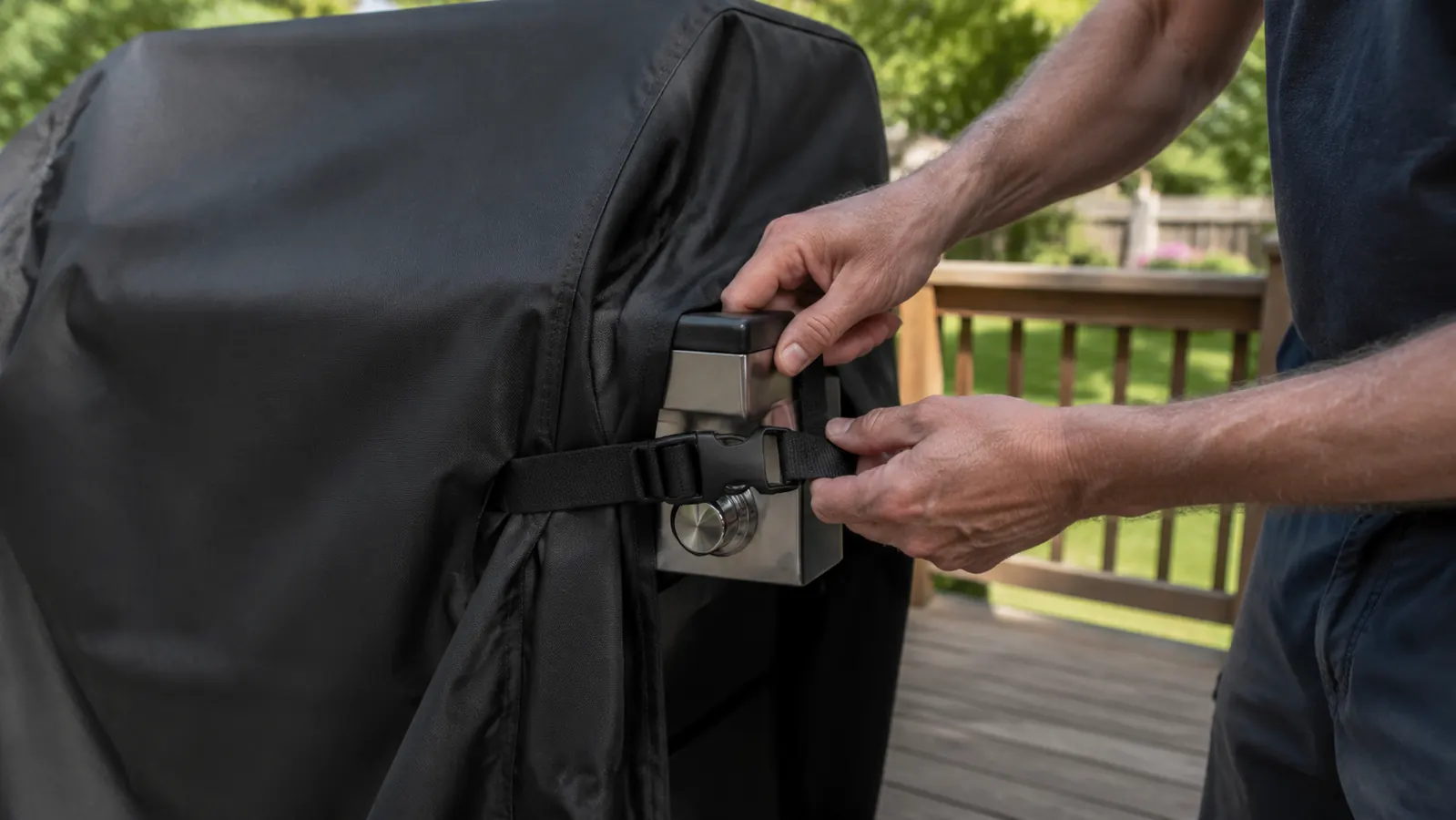
The wind test surprised me more than the rain test. That deck is exposed, and we get spring thunderstorms that straighten the rain out sideways. A cover with only an elastic hem will lift and flap in that, and eventually it catches enough air to come off. The Simple Houseware cover has a buckle strap that cinches the cover to the grill, and it stayed put through every storm we had. It bellied up a little in the worst gusts, then settled back down. I would not trust it in a hurricane, but I would trust it in anything north Georgia is likely to throw at it.
The slower test is the one that matters for people who keep a grill for years. Sun is harder on fabric than rain is, and after a full summer of afternoon sun, this cover still folds like it did on day one. The thin cover in the carport, which saw far less sun, already felt stiff along the creases. Mildew is the other long-term killer. In damp shade, a thin cover will spot and sour within a season. The heavier fabric stayed clean, and that is not a small thing, because mildew does not just look bad. It eats the stitching and shortens the life of the cover.
The fit deserves a mention too. The 55-inch sizing matched that five-burner grill without the cover having to stretch, and it reached down far enough to cover the control panel and the top of the wheels. A cover that is too tight splits at the seams. One that is too loose flaps and wears itself thin. This one sat on the grill the way a cover should sit, with an inch or two of slack and no ballooning.
Pine needles were a small surprise. That deck has a line of trees on the windward side, and every fall the heavy-duty cover collected a load of needles and oak leaves. On the thin cover in the carport they worked their way into the weave over a season. On the Simple Houseware cover I could sweep them off with a gloved hand. It is a small thing, but small things decide whether a cover makes it to year three.
Where the Basic Cover Wins
No cover wins on price except the basic one, and I am not going to pretend otherwise. The Simple Houseware cover costs more up front, and if your grill never sees serious weather, that extra money buys nothing you will actually use. The basic cover is the right choice for a grill that lives under a roof or in a carport. It keeps off dust, light rain, bird droppings, and cobwebs. For that job, the heavy-duty fabric is wasted, and the extra cost is wasted with it.
The basic cover also wins on folding, and that matters more than people admit. It is thin and light, so it wads into a small bundle and tucks behind a shelf or under a seat in the truck. At 58, I do not enjoy wrestling a stiff, heavy cover on and off a grill, and the heavy-duty cover needs two hands and a little patience to fold flat. The basic cover takes one hand and about ten seconds. If you cover and uncover your grill every time you cook, that difference adds up over a season.
There is one more honest point in favor of the basic cover, and it has to do with heat. A thick cover traps heat. If you are in the habit of covering a grill while it is still warm, the lighter shell lets that heat escape faster and holds less moisture against the steel. The right move with either cover is to wait until the grill is fully cool, but the basic cover is more forgiving when people skip that step.
The other thing I noticed is that a basic cover is easier to say goodbye to. When it finally gives out, you shrug and grab another one and you are not out much. The heavy-duty cover is a different story. You have real money tied up in it, so losing it to wind or a fallen branch stings in a way that a cheap cover never would. That is not a reason to avoid the heavy-duty cover. It is just part of the honest cost of owning something better.
If your grill sleeps outside in all four seasons, buy a cover that does too.
Six months of rain, wind, frost, and full Georgia sun, and the Simple Houseware cover still fits and folds like new. It is not the cheapest cover on the rack, and it is not meant to be. It is meant to be the last cover you buy for a while.
Amazon Check Today's Price on Amazon →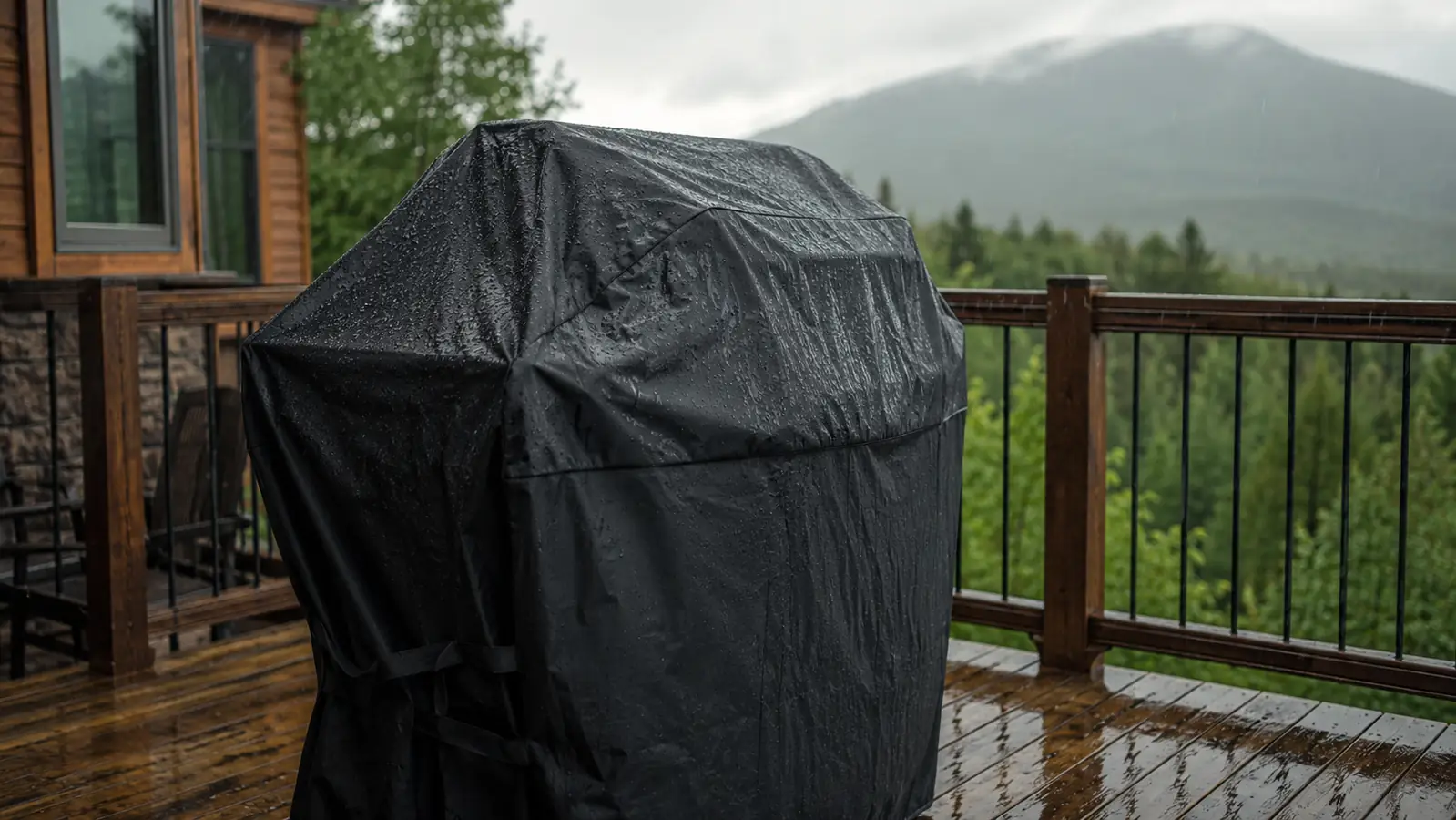
Who Should Buy Which
Buy the Simple Houseware heavy-duty cover if your grill lives out in the open the way my buddy's does, with full summer sun, spring rains, and winter frost. Buy it if you are tired of replacing a cover every year or two, or if the grill underneath cost enough that you want the steel to last. Buy it if wind has ever taken a cover off your grill, because the strap alone is worth the difference. And buy it if mildew has ruined a cover in damp shade, because that is exactly the job the heavier fabric is built for.
Stick with a basic cover if your grill is sheltered. A carport, a covered porch, or a garage for the colder months changes the whole calculation. Buy the basic cover if you grill only now and then and just want something to keep the weather off between cooks. And buy the basic cover if you tend to replace the grill itself before a cover would ever wear out. There is no shame in any of that. It is the right tool for the job, and it leaves more of your money for meat.
My honest bottom line after six months is this. Covers are not all the same, and the difference is not in the label. It is in the weight of the fabric, the way the seams are finished, and whether a strap holds the cover down. If those three things matter for your grill, get the Simple Houseware cover. If they do not, keep your money and spend it on a good brisket.
When the wind picks up, you will be glad you bought the one with straps.
The Simple Houseware heavy-duty cover is the pick for grills that live outdoors all year. See what it is going for on Amazon today and decide for yourself.
Amazon Check Today's Price on Amazon →