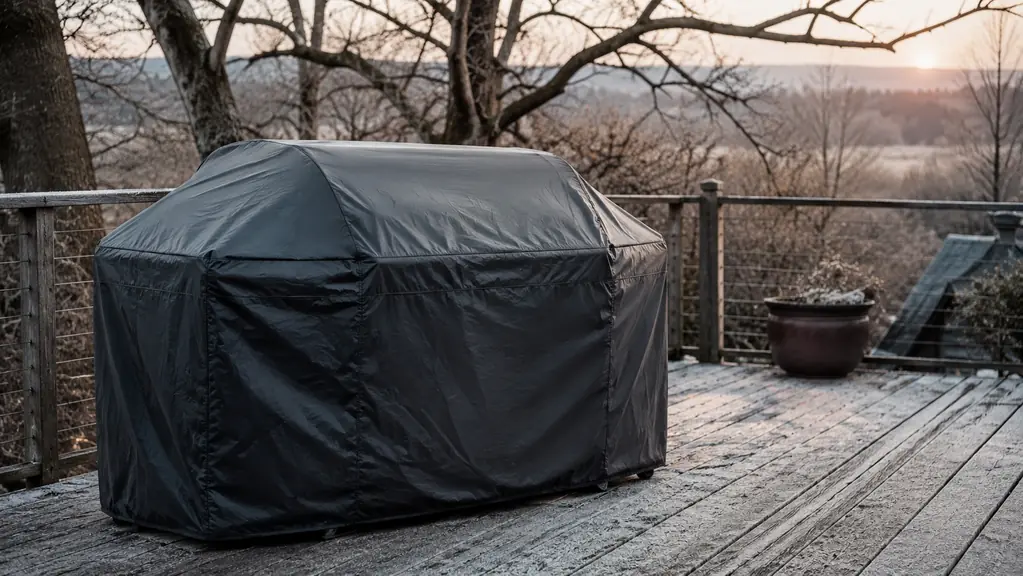
Two winters ago, when the October wind started stripping the leaves off the oaks, I finally stopped pretending a tarp was doing the job as a grill cover. That tarp had spent its third season draped over my offset stick burner, and by the time the frost came, the corners were cracked, a seam had split from one edge to the other, and the brass grommets had pulled right through the plastic. The metal underneath stayed dry, mostly because I had rigged a frame of scrap lumber to keep the tarp from touching the cooker, but the whole arrangement was an eyesore that flapped in every breeze that came off the ridge. Deb told me flat out that if she saw one more bungee cord wrapped around that cooker, she was going to take a picture and send it to my brother.
The day I went to fix it, I stood in the grill aisle and read the backs of cover boxes until I realized they all promised the same things. So I went home and did what I should have done in the first place. I looked up the Simple Houseware 55 inch heavy duty waterproof grill cover, worked my way through its customer ratings, and ordered one. The number that caught my eye was roughly 55,000 ratings averaging 4.6 stars. What matters more is what I can tell you two winters later: the cover has done exactly what the box promised.
If you have never needed a grill cover to last more than one season, this review might sound like overkill. Here is the short version. I bought this cover, forgot about it, and cooked. What I did not plan on was still owning the same cover two winters later, with no rips, no cracked seams, and no rust on the cooker underneath it. That is a rare ending for gear that lives on this deck.
The Quick Verdict
Two full winters of rain, frost, and ridge wind on an exposed deck, and the steel underneath is still dry. The fabric still sheds water, the seams have held, and I would buy the same cover again. Not a perfect cover, but the best value in this category I have found.
Amazon Check Today's Price →Do not buy another grill cover until you read this.
Most grill cover reviews come from people in week one, when every cover looks great. This Simple Houseware cover has now sat through two winters of rain, ice, and wind on an uncovered deck, and the cooker underneath is dry. If you are tired of replacing covers every spring, this is the one to check first.
Amazon Check Today's Price on Amazon →How I've Used It
Before I talk about fabric and seams, you should know how this cover got tested. Mine lives on an offset stick burner at the open end of my deck, with no wall on the north side and nothing between it and the weather but the trees at the edge of the property. The cover is marketed for gas grills, and if you own a three or four burner gas grill in the 55 inch class, that is the grill it was built to fit. I do not cook on gas. I bought this 55 inch cover for the offset because the cooker is roughly the same width across its firebox and cooking chamber, and weather does not care what fuel a cooker burns.
During cooking season, the cover goes on once the cooker cools, usually on a Sunday night, and comes off the next time we fire it up. From late fall through early spring the offset sits idle, and the cover stays on for months at a time. That idle stretch is the real assignment. A cover that only protects a grill between two weekend cooks can be made of almost anything. A cover that has to survive January in north Georgia is the one that tells you the truth.
Every couple of weeks through the cold months I lift one corner and run a finger along the bottom edge of the steel, checking for moisture or rust. After two winters that finger comes away clean. The routine takes two minutes. When I pull the cover off, I set it aside long enough for morning air to move across the metal, then I drop it back down and make sure the skirt hangs evenly all the way around.
What Two Winters Did to the Fabric
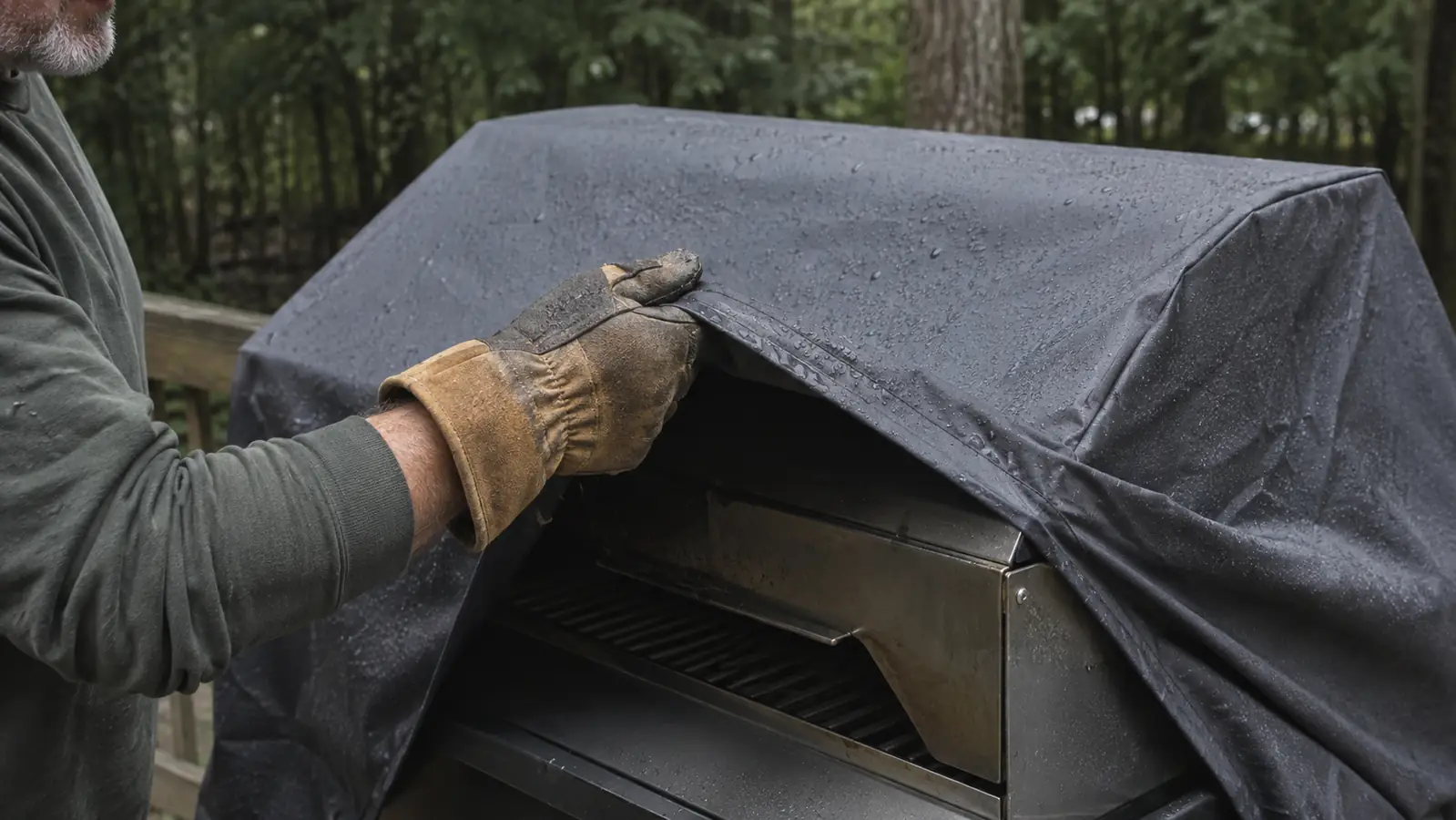
The first thing you notice pulling this cover out of the package is the weight of the fabric. It is closer to a truck tarp than the flimsy material sold with most bargain covers. Light does not pass through it, and the weave is tight enough that water has nowhere to go except off the surface. Two winters later the fabric still has that same heft. There are no stiff spots, no cracks along the folds, no places where a coating is flaking off into your fingers.
The sun has taken some of the newness off the top surface, and if you keep your grill in full sun all day you should expect that. I care more about the other side of the fabric. The waterproofing still sheds water the way it did the day the box arrived. Rain does not soak in and leave a dark shadow, and I have never found standing water sitting on top of the cover after a storm.
The Seams That Usually Quit First
Every grill cover I owned before this one died the same way. The seam along the top ridge split open, or one of the corner seams let water through and the thread rotted from the inside out. That is where I checked first when the cover arrived, and it is where I have looked after every big storm since. After two winters, the seams are intact. On the inside I can run my finger along the stitching and feel nothing loose, no pulled threads, no frayed edges.
The only place that shows honest wear is the bottom hem where it rubs against the deck boards and caster wheels, and even that is scuffing rather than failure. The stitches there have held for two years of pulling the cover on and off dozens of times. That tells me the sewing was done right at the factory, which is the part of a grill cover you cannot see in the product photos.
Rain, Snow, and the Wind Off the Ridge
Last winter gave us the full north Georgia menu. Rain that came sideways, a glaze of ice that bent a neighbor's patio umbrella frame, and melt water that froze on the deck overnight. I went out after that ice storm expecting to find the cover whipped half off the cooker. It was still in place, and the metal underneath was dry. Wind gets under the bottom edge of most covers and works them loose over a few nights. This one has stayed put through two winters of gusts that lay the treetops over.
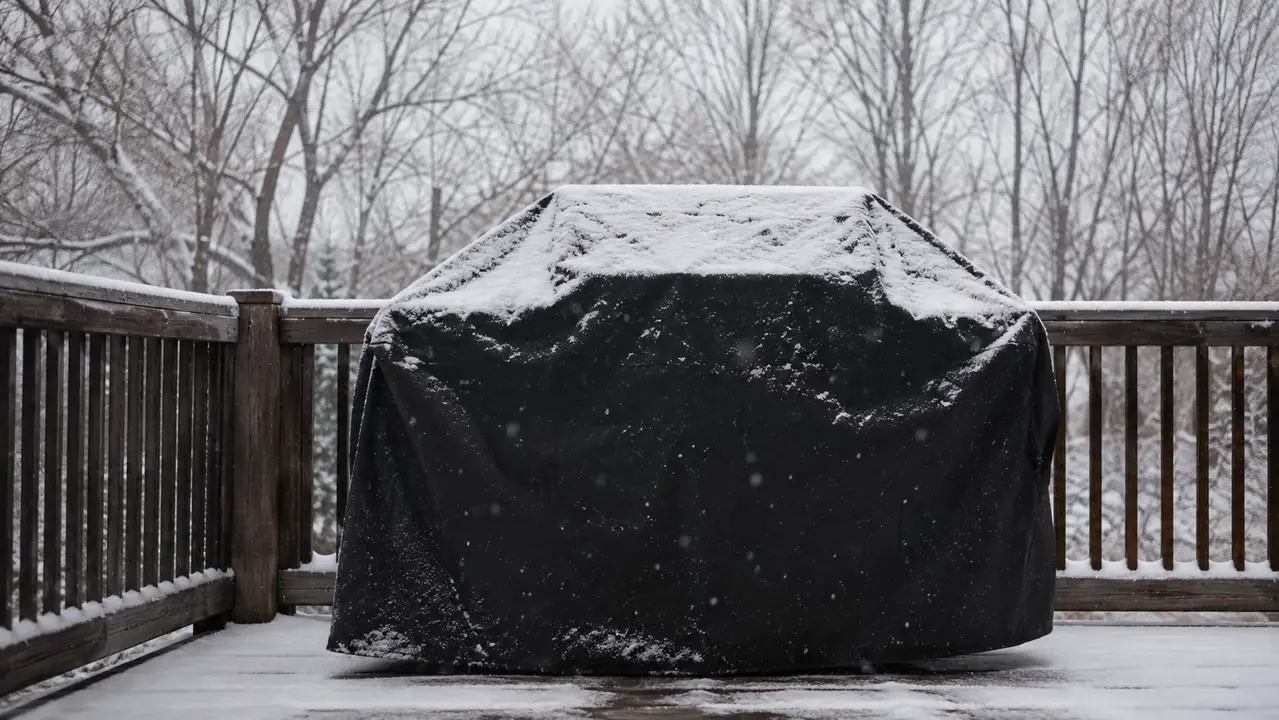
For plain rain, the test is boring, and boring is what you want. After a heavy storm I walk out and look for wet shadows on the top and for a puddle in any low spot. I have not found one. When snow piles up on the cover, it slides off in big sheets once the sun hits it, which is exactly what you want a cover to do around here.
What the Underside Looks Like
When I pulled the cover off this spring for the first cook of the season, I expected to find what you usually find under a cover in the mountains: dust, a few spider webs, maybe a rust bloom along the bottom of the firebox where moisture sits. There was dust, and there was one web, but there was no rust. The paint on the cooker is still intact where the cover has been. The spots that stay exposed are the caster wheels and the lowest few inches of the legs, and that is where you should look for surface rust on any grill that lives outdoors.
The band where the skirt meets the deck is where I check twice a year. Melting frost and dew settle there overnight, right where the metal is closest to the ground. This cover hangs low enough to keep that band dry. Two years in, the band is clean. I cannot make that promise for a grill that sits in a low spot where puddles form, but on my deck the cover has done its job every single day.
One more check I do is on the inside of the cover itself. A cover that traps moisture against steel is worse than no cover at all. I have felt the inside of this one on cold mornings, and it is damp the way any fabric is damp when the air is cold and wet. What matters is that the dampness does not sit against the cooker in a puddle. Air gets in under the skirt, so the steel stays dry.
The Small Gripes
No product this inexpensive is without compromise, and I promised Deb I would not write a review that reads like an advertisement. My first gripe is condensation. If you put the cover on a warm cooker on a cold night, moisture will condense on the inside of the fabric. It has not caused rust on my cooker because I let things cool down first, but the cover's own underside does get damp in those conditions. That is true of any waterproof cover, and it is worth knowing before you buy.
My second gripe is that this is a size class, not a custom fit. A grill with unusual height, a tall side shelf, or another nonstandard shape will not get the tailored look that a fitted cover gives. On a normal 55 inch gas grill or on my offset, the skirt hangs evenly and looks right. The cover is sold for typical grills, not for oddball ones.
What I Liked
- Genuinely heavy duty fabric that has not cracked, stiffened, or thinned in two years.
- Seams and stitching have held through ice, wind, and months of winter sun.
- Water still beads on the surface and the steel underneath stays dry.
- Sizing is generous enough that the cover fits without fighting.
Where It Falls Short
- The top surface dulls after long sun exposure, so it will not look new forever.
- Moisture can condense on the inside if you cover a warm cooker on a cold night.
- A size class cover will not hug an unusually shaped grill the way a custom fit would.
Two winters of ice, sideways rain, and ridge wind, and the steel under this cover has stayed dry. That is the whole review.
Who This Is For
This cover is for anyone whose grill lives outside with no roof over it. If your grill takes the weather all year and you are tired of buying a new cover every spring, this is the price class to start with. It is also for people like me who cook on weekends and want a cover that will still be doing its job when the next two winters are behind them. The Simple Houseware name shows up all over this category for a reason: the product does what it says.
Who Should Skip It
If your grill stays in a garage, under a covered porch, or against a wall that blocks most of the weather, you do not need this much fabric. A basic cover will keep dust and leaves off, and it will cost less.
You should also skip it if your grill has an unusual shape that does not fit a 55 inch rectangular footprint. A cover can only protect what it can reach. If your cooker is tall and narrow or has a bulky hopper on the side, look for a cover made to your measurements instead.
And one more thing. If you will not take two minutes to let a cooker cool before covering it, condensation will annoy you no matter which heavy duty cover you choose. That is not a fault of this cover. That is how waterproof covers behave.
Why Two Winters Matter
Most grill cover reviews are written within the first month, when every cover looks like a winner. A cover only proves itself after it has sat through the season that kills the others. Mine has now sat through two of those seasons. The Simple Houseware 55 inch heavy duty waterproof grill cover is not a glamorous purchase, but it is one of those rare buys that quietly does its job for years. For anyone who has replaced a grill cover every spring, that is the whole point.
Two years in, I would buy it again.
If your grill cover keeps dying after one season, this is the replacement to look at first. The Simple Houseware cover has held up through two winters on my deck, and the cooker under it has stayed dry the whole time.
Amazon Check Today's Price on Amazon →